Key references
- Tomasz Strekowski
- Adham Dannaway
- Pascal Strasche
- Wendy Schoor
- Koco
- Daniel Novkov
Case Study · Personal · Website
Designing a modern UX portfolio platform built around how recruiters, hiring managers, developers and business stakeholders actually evaluate designers - focused on trust, clarity, storytelling and fast decision making.
Most designer portfolios focus heavily on visuals but fail to answer the questions hiring managers and recruiters actually care about.
The project focused on designing a modern UX portfolio platform aimed at helping designers present their work more effectively to recruiters, hiring managers, developers and business stakeholders.
The challenge was not simply creating another portfolio website. The real problem was understanding what different audiences actually expect when reviewing a designer portfolio and how the experience could increase the chances of a designer getting hired.
The outcome was a portfolio experience designed around trust, clarity, storytelling and fast decision making. Recruiters and stakeholders often review portfolios under time pressure - so the platform needed to communicate value within seconds.
Several portfolio websites were analysed to understand industry patterns, strengths and usability issues.
Interviews were conducted across multiple stakeholder groups - developers, recruiters, business owners, designers and marketing professionals - to understand how each audience evaluates portfolios and what influences hiring decisions.
Recruiters prioritised:
Recruiters consistently preferred portfolios that reduced cognitive load.
Hiring managers focused more on:
They wanted evidence behind decisions, not only visuals.
Developers valued:
Most developers said they'd only inspect frontend code if coding skills were relevant for the role.
Marketing stakeholders emphasised:
Designers highlighted:
The interviewee asked not to make the video public - if you want to see it, please send me a message.
Based on research, multiple personas were created to represent the primary audiences - and a scenario was built to illustrate how the portfolio plays a role in real hiring decisions.
Priya Kumar (Head of Marketing) and Andrey Bondarenko (Head of Front-End Development) asked to have a meeting with the Head of UX Design, Freddy Okoro. During the meeting, they said that they were facing a huge backlog as the company didn't have enough designers, so they asked Freddy to open some roles. Andrey was stuck waiting for the design team to hand over digital projects; Priya needed her project done ASAP because the marketing team was about to launch online campaigns.
After the meeting, Freddy called Niamh McGuinness to ask her to open a new UX Design role. After some research, Niamh saw Rafael Basso's LinkedIn profile, talked to him for 30 minutes to see if he'd be a good fit, asked for a portfolio link, and - even though it isn't her expertise - really appreciated its design and handed Rafael's CV and portfolio to the hiring manager. To interview Rafael, Freddy asked Roberto Silveira (PO of the backlogged project) for help during the interview process, also showing him Rafael's portfolio.
After the process, Rafael was hired, the backlog disappeared, and the project helped the company skyrocket its sales.

Recruiter for IT, design and tech for 8 years at the same company. Loves partying with friends and visiting her parents in the countryside.
His portfolio is great, so Freddy decides to move on with the interview. Rafael is hired, she gets her bonus and goes to NY for Christmas. Because of new processes she implemented, the time-to-hire is the fastest in the company.

15+ years as a designer - started as an intern during his arts and design studies, then moved into UX. Now leads the UX department.
The materials show Rafael is a strong fit. His portfolio suggests he can help clear the backlog and speed up delivery, and his coding skills can improve communication with devs - meaning Freddy can finally stop working overtime.

Was a developer in Brazil for 10 years - started as an intern and became head of development. Moved to Ireland for an English course, worked as a cleaner, then got a master's in business and his current PO role.
Roberto sees that Rafael can communicate with different teams, and his coding skills can improve cross-team collaboration.
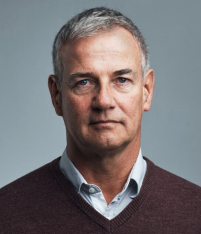
Immigrated to Ireland 25 years ago, having lived in London just after high school. Joined the company 6 months ago as Head of Front-End Development to help clear the backlog.
Andrey wants to learn more about design and Rafael is a UX mentor - a great fit. Rafael's coding knowledge can also help fix the cross-discipline communication gap.

Born and raised in Dublin. Single by choice - focused on her career, not on starting a family.
Rafael is a UX mentor and worked 6 years in a marketing team as a designer - so he can give her practical insights and help her grow her UX skills.
The platform structure was redesigned to prioritise recruiter and hiring manager workflows.
Always starting with low fidelity sketches.
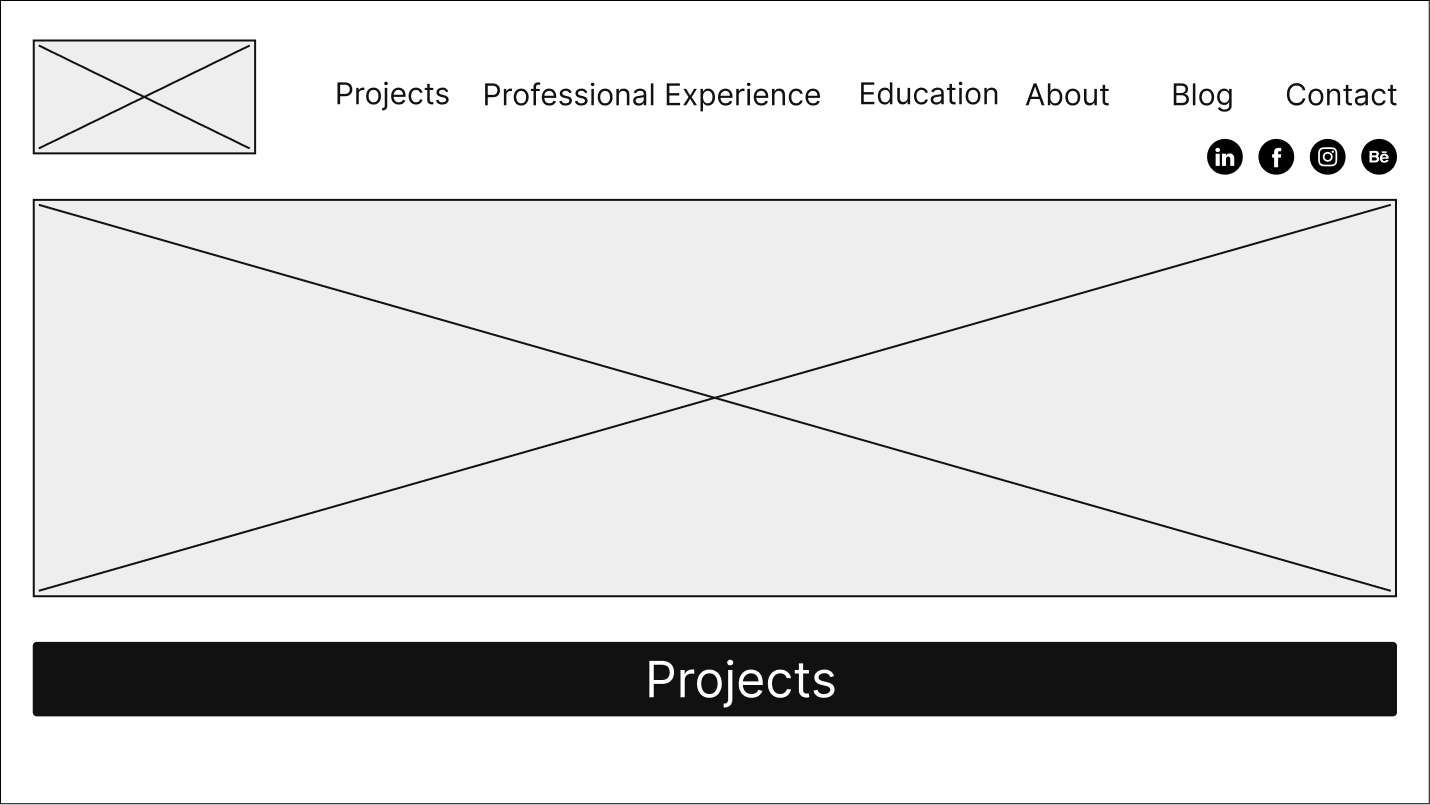
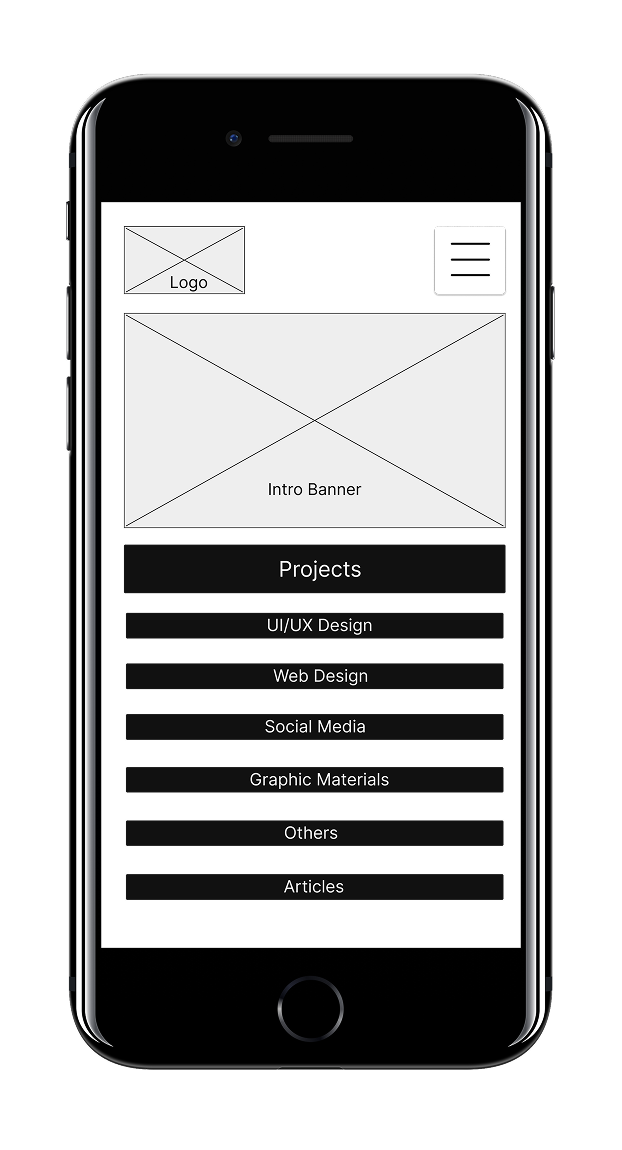
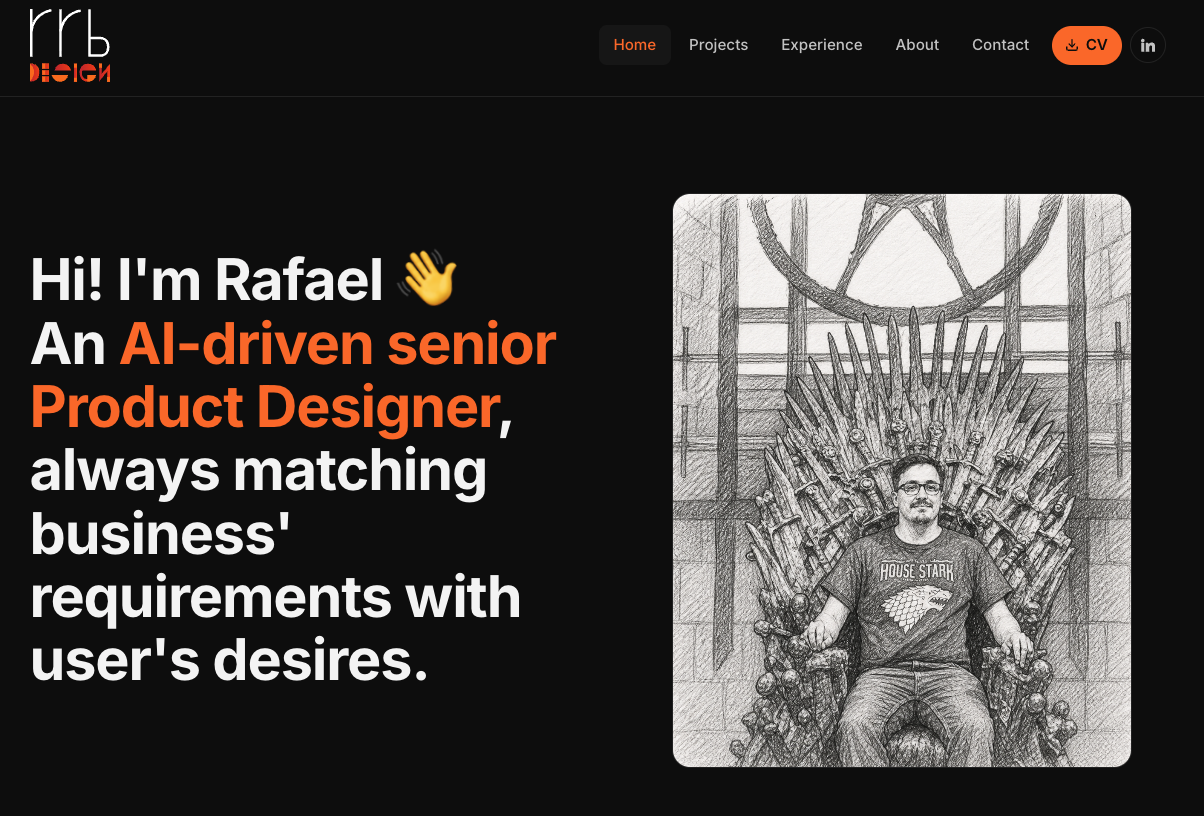
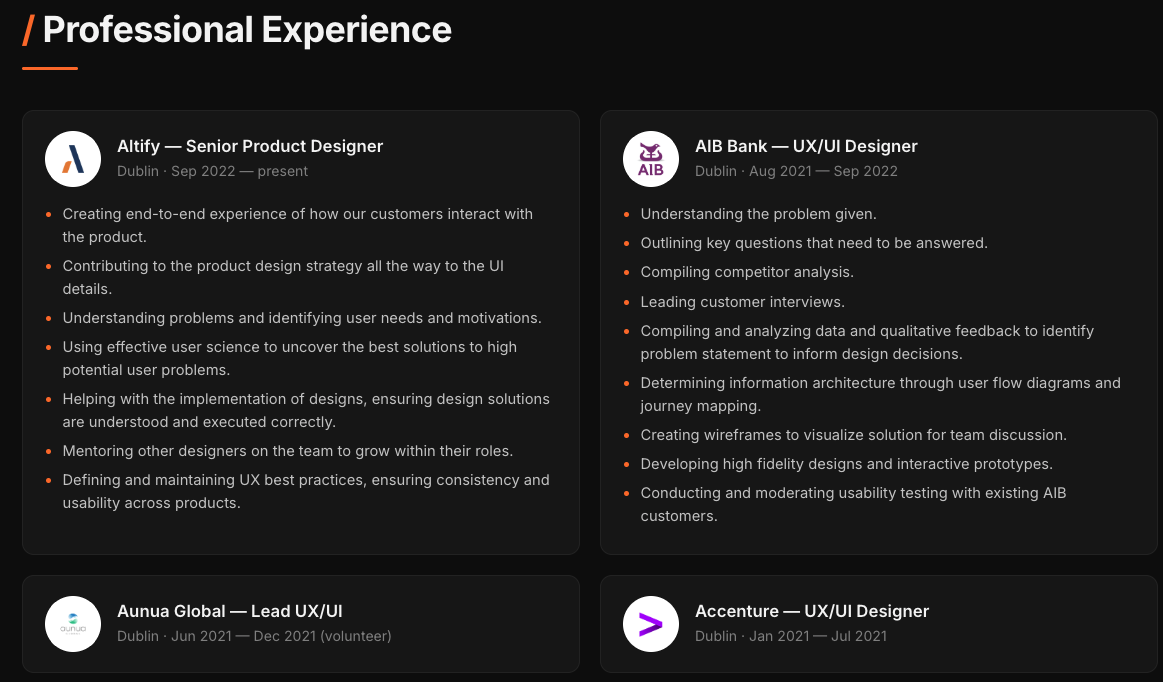
The experience should feel intuitive and easy to scan.
The platform should feel personal and authentic instead of corporate.
Every section should support hiring decisions.
Projects should communicate through strong visuals without sacrificing clarity.
Interactions should feel lightweight and responsive.
The experience should be inclusive and work for all users, regardless of device or ability.
The platform balanced creativity with usability. Instead of overdesigning the experience, the solution focused on helping stakeholders make faster and more confident hiring decisions.
Two moderated usability sessions were recorded with target users to validate the portfolio's structure, storytelling and key decision points.
The project successfully transformed research insights into a portfolio experience focused on usability, storytelling and hiring efficiency.
By aligning the experience with the needs of recruiters, hiring managers, developers and business stakeholders, the platform moved beyond visual presentation and became a strategic product experience.
The result was a scalable, user-centred portfolio framework designed to communicate expertise, process maturity and business value in a clear and compelling way.
This project fundamentally changed how I think about portfolio design. Instead of treating portfolios as visual showcases, I started treating them as strategic products designed to support decision-making.
The research demonstrated that strong UX portfolios are not only about aesthetics - they're about clarity, trust, storytelling and helping people quickly understand the value a designer can bring to a business.